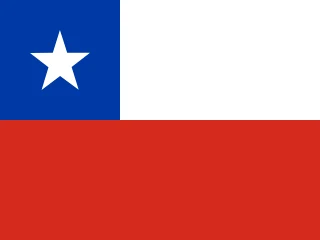
 Chile
Is Chile safe to travel to right now?
Updated August 19, 2026 · Source: U.S. State Dept · also UK FCDO, Canada
Level 2: Exercise increased caution
U.S. State Department: Level 2, Exercise Increased Caution. Advisory updated August 19, 2026. Page built November 28, 2026; open the live page for the current level.
What governments say
- U.S. State DeptLevel 2: Exercise increased caution
- UK FCDOFCDO no advice against travel
- CanadaExercise a high degree of caution
- UK FCDO (November 9, 2026): Removal of information about heavy rain and severe mudslides in eastern Santiago ('Warnings and insurance’ page).
- Canada (November 13, 2026): Natural disasters and climate section – removed information on flooding and landslides in several regions, including Santiago Metropolitan Region
The State Department's feed doesn't say what changed in its own advisory (last updated August 19, 2026).
What the State Department says
Exercise increased caution in Chile due to crime, unrest, and health.
Crime
- Petty crime is common in Chile. Common crimes include mugging, pickpocketing, and theft. Violent crimes also occur, including assaults, homicide, carjackings, and residential break-ins.
Unrest
Large-scale demonstrations may occur in Santiago and other cities in Chile.
- Demonstrations can take place with little or no notice.
- Demonstrations often result in disruptions to transportation, including public buses and Santiago metro services.
Health
The U.S. Centers for Disease Control (CDC) has issued a Travelers’ Health Notice for Andes virus (Hantavirus) in the region.
Entry requirements
- Your passport must be in good condition and valid for the period of your stay.
- You do not need a visa for a tourist or business stay of 90 days or fewer (if traveling on a tourist passport).
- Upon arrival, you will receive a Tourist Card (Tarjeta de Turismo) valid for up to 90 days, which you can extend for another 90-day period by paying $100 US at the Chilean Immigration Office.
Health and vaccines
- Vaccinations: Be up-to-date on all vaccinations recommended by the U.S. Centers for Disease Control and Prevention.
Safety by region
The U.S. advisory for Chile doesn't list regions with their own level.
Emergency and embassy
- Police
- 133
- Ambulance
- 131
- Fire
- 132
- U.S. mission
- U.S. Embassy Santiago
- Address
- Avenida Andres Bello 2800, Las Condes, Santiago, Chile
- Phone
- +(56)(2) 2330-3000
Covered if plans change?
Many health plans don't pay abroad. The State Department explains what to check before you buy travel or medical insurance.
Money, plugs and quick facts
- Capital
- Santiago
- Currency
- Chilean peso (CLP)
- Languages
- Spanish
- Plugs
- Type C, F, L · 220/380 V
- Drives on the
- right
- Emergency
- 133 / 131 / 132
- Calling code
- +56
Weather by month in Santiago
| Month | Jan | Feb | Mar | Apr | May | Jun | Jul | Aug | Sep | Oct | Nov | Dec |
|---|---|---|---|---|---|---|---|---|---|---|---|---|
| High °C | 29 | 29 | 27 | 23 | 19 | 16 | 15 | 16 | 19 | 21 | 25 | 28 |
| Low °C | 16 | 16 | 15 | 12 | 8 | 5 | 5 | 6 | 8 | 10 | 12 | 14 |
| Rain mm | 3 | 5 | 2 | 30 | 40 | 69 | 60 | 56 | 42 | 40 | 12 | 9 |
Traveling with a pet
Hatchlore has not checked an official pet-import page for Chile. That is unverified, not a statement that pets are allowed or refused.
About Chile
Chile, officially the Republic of Chile, is a country in the Southern Cone of southwestern South America. It is the southernmost country in the world and the closest to Antarctica, extending along a narrow strip of land between the Andes Mountains and the Pacific Ocean.