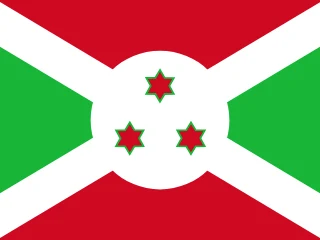
 Burundi
Is Burundi safe to travel to right now?
Updated April 29, 2025 · Source: U.S. State Dept · also UK FCDO, Canada
U.S. State Department: Level 3, Reconsider Travel. Advisory updated April 29, 2025. Page built November 28, 2026; open the live page for the current level.
What governments say
- U.S. State DeptLevel 3: Reconsider travel
- UK FCDOFCDO advises against all travel to parts of the country
- CanadaAvoid non-essential travel (with regional advisories)
- UK FCDO (May 21, 2026): Addition of information about a declaration of an Ebola outbreak in DRC on 15 May (‘Health page’).
- Canada (September 24, 2026): Health – editorial change
The State Department's feed doesn't say what changed in its own advisory (last updated April 29, 2025).
What the State Department says
Reconsider travel to Burundi due to political violence , crime , and health . Some areas have increased risk. Read the entire Travel Advisory.
The possibility for political violence exists throughout Burundi. Police and military checkpoints are common and can limit movement. Police may search private homes for weapons. The borders may close without notice.
Violent crimes like assault, carjacking, home invasion, grenade attacks, and armed robbery are possible. Criminals may target foreigners and residents suspected of having large sums of cash. Local police lack the resources and training to respond effectively to crimes.
Medical services in Burundi fall well below U.S. standards, and there are no adequate trauma services in the country. Emergency medical and fire services are limited or non-existent in some areas of the country. Even relatively minor health problems may necessitate a medical evacuation at the traveler’s expense. Medical evacuation insurance valid for travel to Burundi is strongly recommended.
Due to the risks, the U.S. government has limited ability to provide emergency services to U.S. citizens throughout Burundi. U.S. Embassy staff are subject to restrictions when traveling in certain areas of Burundi and may be subject to other constraints as security conditions warrant. U.S. government employees working in Burundi are prohibited from travelling outside Bujumbura Mairie during hours of darkness (typically 6:00 p.m. to 6:00 a.m.).
Due to the risks, the U.S. government may be unable to provide emergency services to U.S. citizens in the following areas:
- The provinces of Bubanza.
- Cibitoke and Kibira National Park (including the park’s southernmost part in Muramvya province).
Review the Travel Guidance for additional information on travel to Burundi.
Entry requirements
- Travelers can obtain a 30-day visa upon arrival at the Bujumbura Airport for USD 90.
- The U.S. Department of State is unaware of any HIV/AIDS entry restrictions for visitors or foreign residents of Burundi.
Health and vaccines
- Vaccinations: Be up-to-date on all vaccinations recommended by the U.S. Centers for Disease Control and Prevention.
Safety by region
- Former Central Market located on Chaussee Prince Louis Rwagasore… Level 4: Do not travel
- Cibitoke and Bubanza provinces and Kibira National Park Level 4: Do not travel
Emergency and embassy
- Police
- 117
- Ambulance
- 112
- Fire
- 118
- U.S. mission
- U.S. Embassy Bujumbura
- Address
- Avenue Des Etats-Unis, Bujumbura, Burundi
- Phone
- +(257) 22-20-7000 (Monday - Thursday 2 p.m. – 5 p.m., Friday 7:30 a.m. – 12:30p.m.)
Covered if plans change?
Many health plans don't pay abroad. The State Department explains what to check before you buy travel or medical insurance.
Money, plugs and quick facts
- Capital
- Gitega
- Currency
- Burundian franc (BIF)
- Languages
- French, Kirundi
- Plugs
- Type C, E · 220/380 V
- Drives on the
- right
- Emergency
- 117 / 112 / 118
- Calling code
- +257
Weather by month in Gitega
| Month | Jan | Feb | Mar | Apr | May | Jun | Jul | Aug | Sep | Oct | Nov | Dec |
|---|---|---|---|---|---|---|---|---|---|---|---|---|
| High °C | 24 | 24 | 24 | 22 | 23 | 24 | 25 | 25 | 26 | 24 | 23 | 23 |
| Low °C | 15 | 15 | 15 | 14 | 14 | 14 | 14 | 15 | 15 | 15 | 14 | 14 |
| Rain mm | 86 | 93 | 119 | 133 | 47 | 5 | 1 | 11 | 31 | 100 | 124 | 106 |
Traveling with a pet
Hatchlore has not checked an official pet-import page for Burundi. That is unverified, not a statement that pets are allowed or refused.
About Burundi
Burundi, officially the Republic of Burundi, is a landlocked country in East Africa. It is located in the Great Rift Valley at the junction between the African Great Lakes region and southeastern Africa, with a population of over 14 million people.